How to Harness Growth Outside the Comfort Zone
by Chris Brooks
Beyond the Bedroom: Why Your Playing Is "Fragile" (And How to Fix It)
We’ve all been there. You spend all week perfecting a riff or a solo in your room. You’ve got the perfect chair, your favorite pick, and your amp settings dialed in exactly to "the spot." It feels effortless. It feels like mastery.
Then, you go to a rehearsal, a lesson, a weekend jam, or try to show a friend. Suddenly, your fingers feel like sausages, the tone sounds like thin paper, and the "mastery" disappears.
The uncomfortable truth? If it only works in your bedroom, you haven't actually mastered it yet. You’ve mastered a specific set of circumstances, not the music itself. True growth doesn't happen in a vacuum; it happens when you take your skills into the wild and learn to survive the elements.
The Symptoms of "Fragile Skill"
If you find yourself saying any of the following, you’re likely stuck in the comfort zone trap:
-
"It worked perfectly when I played it at home."
-
"It only sounds good through MY specific amp settings."
-
"I can’t play it while you’re watching me."
-
"I can only hit that transition if I’m sitting down."
The Strategy: Building "Environmental Resilience"
The goal isn’t to find a perfect environment - it’s to become environmentally resilient. You want to develop a skill so robust that it isn't threatened by a different pick, a different room, or a different audience.
The good news? If it works at home, you’ve proven it’s possible. Now, you just need to stress-test it. To get to the next level, you have to face a "new devil" - the discomfort of the unfamiliar.
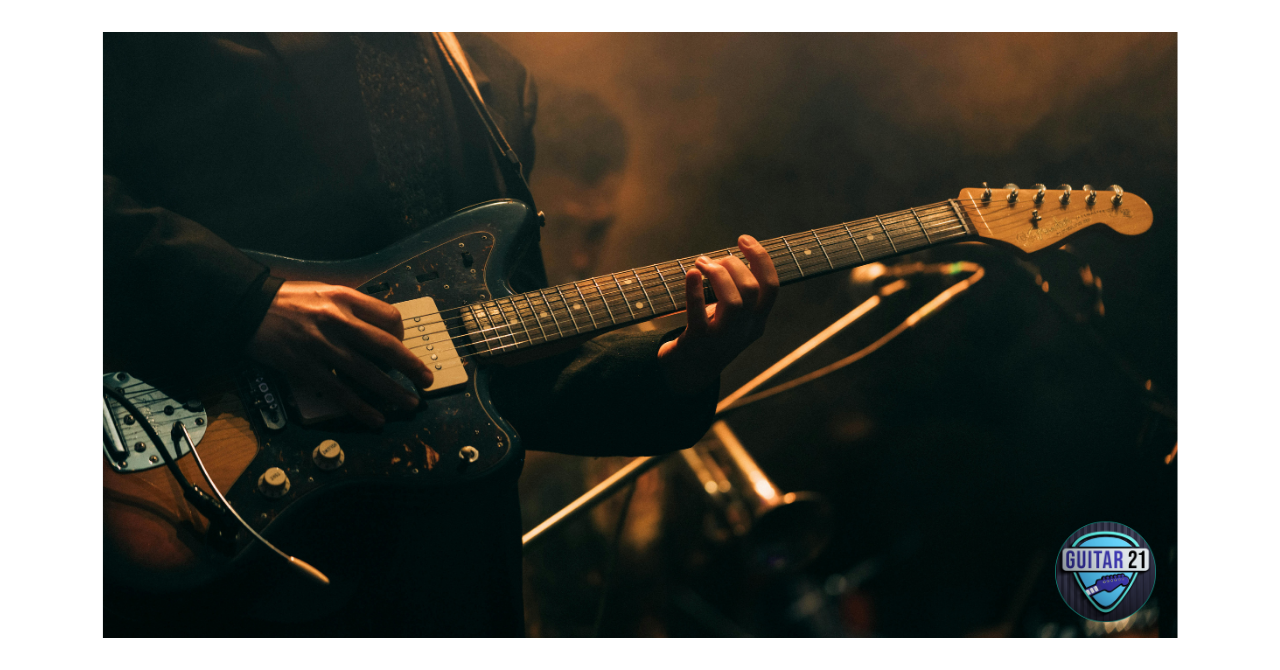
5 Tips for Harnessing Growth Outside the Comfort Zone
To turn a fragile skill into a permanent one, use these strategies to intentionally break your comfort cycle:
1. The "Variable" Practice Method
Don't just repeat the song; change the variables. Play it on an acoustic if you usually play electric. Change your amp to a "bad" setting and see if you can still make it musical. Swap your favourite pick for the one you like the least. If you can play it through the "wrong" gear, playing it through the "right" gear will feel like a superpower.
2. Change Your Physicality
If you always practice sitting down, you’re training your muscles for a posture you’ll rarely use on stage. Stand up. Move around. Try playing in a different room with different lighting. These small sensory changes force your brain to stop relying on autopilot and start focusing on the actual mechanics of playing.
3. The "Cold Start" Test
We often "warm up" into our best playing. The real world doesn't always give you 20 minutes to get limber. Try the "Cold Start": Pick up the guitar first thing in the morning, or the moment you get home, and try to play that difficult section once, perfectly, without a warmup. This builds the "instant access" skill required for performance.
Mind you, it's still a great idea to warm up. It's just that we don't always have that luxury.
4. Controlled Exposure (The Watcher Effect)
If "someone watching" ruins your flow, you need to desensitize your nervous system. Start small: Record yourself on video (the "red light" effect mimics performance anxiety). Then, play for a partner or a friend. The more you expose yourself to the "threat" of an audience, the more your brain realizes it’s not a threat at all.
Have fun with it, be a bit playful, and laugh if you screw up. Take the stigma out of being human.
5. Strategize Your Way Out of Discomfort
Growth occurs when you lean into the "suck." When something feels awkward or difficult because of a change in environment, don't go back to what’s comfortable. Stay in the discomfort and analyze why it feels wrong. Is your grip too tight? Is your posture slumping? When you solve a problem under stress, that solution sticks forever.
Your favourite players are no doubt awesome, but not infallible. Even in their chosen prime environments, they're prone to errors, but they've learned to detour out of trouble before many people would even spot it.
People notice when you follow that urge to "drop everything" and revert to a comfortable state. Learning to work through the awkward moments is a skill in itself, and it starts with choosing fight rather than flight.
The Bottom Line: The better you get, the less you will obsess over the little details. You won’t care about the pick or the amp, because the music is in you, not the gear.
Stop protecting your playing. Start testing it.
Chris

Chris Brooks is the founder of Guitar21 as well as the writer of 18 chart topping guitar technique books. His latest creation is Viking Shred Guitar Suite - the ultimate Neoclassical Shred Guitar course.