When Short Guitar Practice Beats Couch Time

The Science of Effective Repetition
by Chris Brooks, Guitar 21
It might sound counter-intuitive, but when it comes to the details of technique, less practice might do you better than long noodling. It’s not just about fitting guitar into a busy schedule; it's about how your brain learns.
Long, unfocused sessions often devolve into "couch time" - mindless repetition that does little for your progress. Short, deliberate practice, however, leverages the incredible power of neural feedback loops.
The Unseen Conversation: How Your Brain Learns Guitar
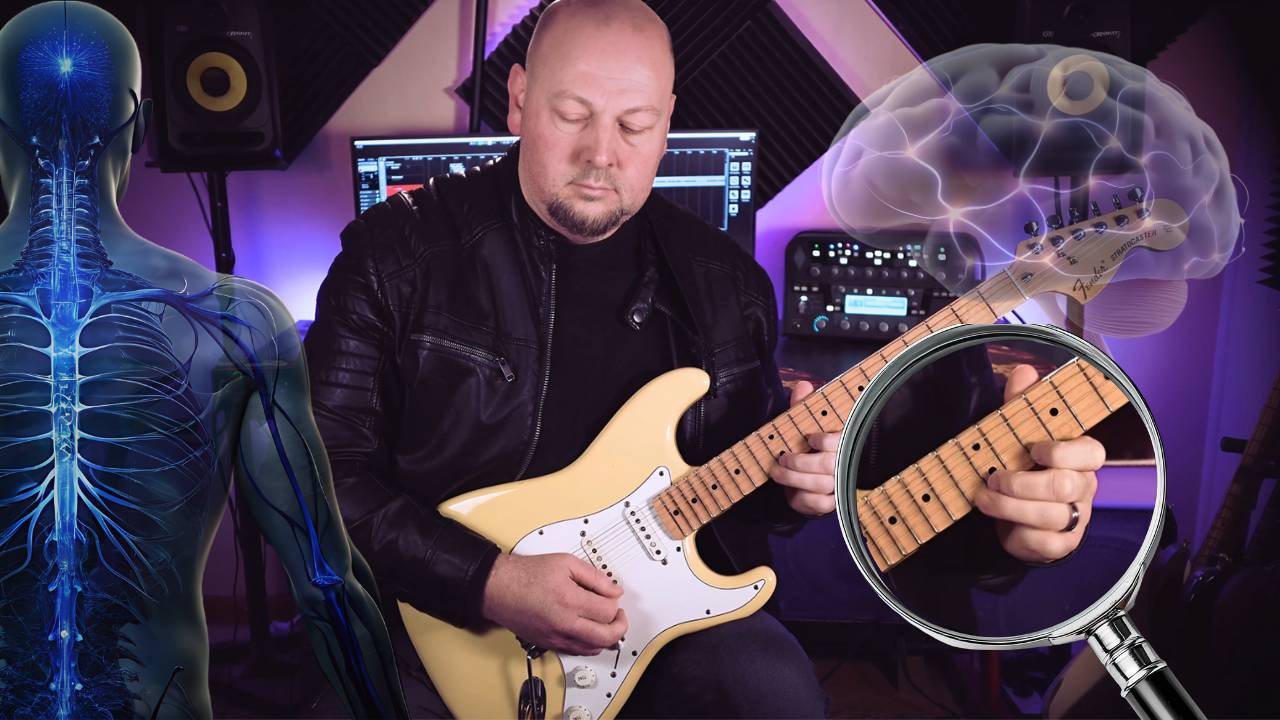
Every time you pick up your guitar, your brain engages in a rapid-fire conversation with your body. This is your sensorimotor feedback loop in action. It's a continuous cycle that allows you to learn and refine physical skills:
-
Your Brain's Intent: You mentally decide to play a specific drill or lick.
-
Motor Command: Your brain sends signals to your muscles to execute that movement.
-
Sensory Feedback: Almost instantly, your body sends back a flood of information:
-
Auditory Feedback: Did it sound in tune? Was the timing right? Did it buzz?
-
Proprioceptive Feedback: Where are my fingers in relation to the fretboard? How much tension is in my wrist?
-
Tactile Feedback: How does the string feel against my fingertip? Did the pick glide smoothly?
-
-
Evaluation & Correction: Your brain compares the actual sensory input to what it intended. If there's a mismatch (an error), it signals for a correction and adjusts the motor command for the next attempt.
This constant "prediction, execution, comparison, update" cycle is the engine of skill development.
The Pitfall of Mindless Repetition
The problem with "couch time" or simply putting in long hours without focus is that it breaks this vital feedback loop. If you're repeating something mindlessly - perhaps while distracted by your phone or TV - your brain stops actively evaluating the sensory feedback.
For blues licks? Hey, wail away. For chops? Attention span does more than time alone.
Without active evaluation, there's no strong "error signal." You might be repeating mistakes or reinforcing inefficient movements without your brain ever flagging them for correction. It's like having a broken GPS: you're driving, but you have no idea if you're on the right path or how to adjust. You're putting in time, but you're not actually learning or making lasting changes to your neural pathways.

Supercharging Your Loops: The Power of Deliberate Practice
Short, focused practice sessions are powerful because they force you to engage in deliberate practice, which is precisely what maximizes these feedback loops:
-
Active Listening: You're fully present, actively listening for clarity, timing, and tone.
-
Feeling for Tension: You're consciously monitoring your body for unnecessary tension or discomfort.
-
Targeting Errors: When a mistake occurs, your brain lights up with an "error signal" (a specific neurological response). This marks the moment as critical.
-
Immediate Correction: By immediately slowing down and correcting that specific error, you're efficiently replacing the "bad data" in the loop with the "good data."
This focused, iterative process of error detection and correction is what builds strong, accurate, and efficient neural pathways. You're not just moving your fingers; you're actively rewiring your brain.
Leveraging External Feedback: Tools for Deeper Insight
Sometimes, our internal feedback isn't enough, especially for subtle mechanical issues. That's where external feedback tools become invaluable:
-
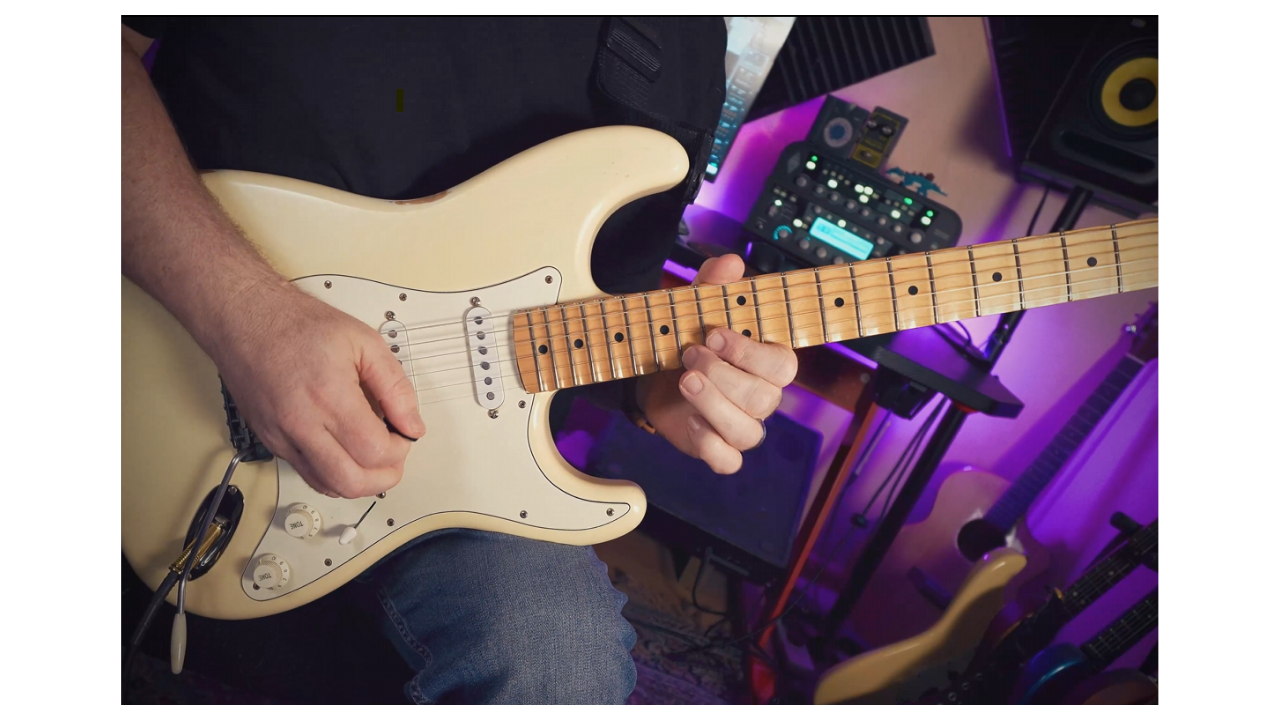
Video Recording: Set up your phone and record yourself. You'll often spot tension, inefficient pick paths (like "string hopping"), or posture issues that you can't feel while playing. This visual feedback is incredibly powerful.
-
Click Work: Metronomes or drum tracks can keep your timing honest, removing any self-deception about whether you're truly in time.
-
Slow-Motion Video: Modern phones can capture incredible detail. Watching your picking hand in slow-mo can reveal if your pick is truly escaping the strings efficiently or if it's getting caught.
Embrace the Frustration: It's a Learning Trigger
Don't shy away from the frustration that comes with struggling through a difficult section. That feeling is actually a biological signal! When you make mistakes and feel challenged, your brain releases neurochemicals like norepinephrine and acetylcholine.
These act like "highlighters" for your neurons, signaling that the current neural connections need to be strengthened or modified. If you never push yourself to the point of making mistakes, you're missing out on these crucial learning triggers.
Summary: Why Short Practice Wins
Ultimately, short, focused practice sessions are superior to long, distracted ones because they optimize your brain's natural learning mechanisms. By staying present and actively engaging with the feedback loop:
-
You maximize error detection and immediate correction.
-
You actively rewire neural pathways for efficiency and accuracy.
-
You prevent the reinforcement of bad habits.
-
You leverage frustration as a powerful catalyst for growth.
So, next time you sit down with your guitar, remember: it's not about the clock; it's about the quality of the conversation between your brain and your hands. Make every repetition count.
Chris

Chris Brooks is the founder of Guitar21 as well as the writer of 18 chart topping guitar technique books. His latest creation is Viking Shred Guitar Suite - the ultimate Neoclassical Shred Guitar course.